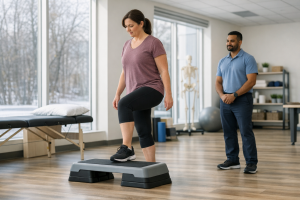
Knee pain can begin after a twist or fall, build gradually with work or exercise, or return whenever activity increases. Physiotherapy can often help by identifying relevant movement and activity factors, improving strength and mobility, and guiding a gradual return to the activities that matter to you.
Whether physiotherapy is the right first step depends on how the symptoms began and whether warning signs are present. A routine assessment may be reasonable when pain persists, recurs or limits activity. Significant trauma, signs of infection, circulation concerns or certain other symptoms may require medical or urgent evaluation first.
This guide explains how to choose an appropriate next step, what to expect during an assessment and how an individualized rehabilitation plan may be developed. It is intended to support informed decisions rather than help you diagnose your knee from a symptom list.
Can Physiotherapy Help With Knee Pain?
The short answer
Yes, physiotherapists commonly assess and manage many types of knee pain. Evidence-informed care may include education, exercise, temporary activity modification and progressive loading. The specific approach depends on the clinical findings, health history, goals and demands placed on the knee.
Physiotherapy is not appropriate as the only response to every presentation. If an assessment suggests a possible fracture, infection, blood clot, serious medical condition or problem requiring surgical review, the physiotherapist may modify or stop the examination and recommend another level of care.
Potential goals beyond short-term pain relief
Pain matters, but it is not the only useful measure of improvement. Rehabilitation may also aim to improve walking, stair use, lifting, knee mobility, lower-body strength, confidence with movement and tolerance for work, exercise or sport.
Function can sometimes improve before symptoms disappear completely. Conversely, a temporary reduction in pain does not necessarily mean the knee is ready for unrestricted loading. Progress is better understood by considering symptoms and function together.
Why an assessment comes before a plan
Similar symptoms can arise in different circumstances. Pain at the front of the knee during stairs, for example, may require a different plan from pain and swelling after a collision. Age, previous injuries, recent changes in activity, medical conditions and personal goals can also influence the appropriate next step.
At Human Integrated Performance, the purpose of a knee assessment is to understand this broader context, identify clinically relevant findings and determine whether physiotherapy, a modified assessment or referral is appropriate. No single posture, alignment finding or physical test should be used by itself to explain every case of knee pain.
Choose Your Next Step: Physiotherapy, Medical Care or Urgent Assessment
When a routine physiotherapy assessment may be reasonable
Booking a routine assessment may be appropriate when:
- Pain developed gradually and is stable, without signs of serious illness or major trauma.
- A relatively minor injury has caused ongoing discomfort, stiffness or difficulty with normal activity.
- Symptoms recur when you walk, run, use stairs, lift, work or return to recreation.
- Knee pain has persisted despite reducing or changing the aggravating activity.
- You have medically diagnosed knee osteoarthritis and want guidance on exercise and activity.
- You are preparing for surgery or have been directed to begin rehabilitation after an operation.
You do not need to wait until pain is severe. An earlier assessment may help when symptoms are changing how you move, reducing participation or repeatedly returning as your activity increases.
When to contact a primary care provider or another medical professional
A prompt medical opinion may be appropriate after significant trauma, particularly if you cannot put weight through the leg, the knee swelled rapidly, there is marked tenderness over a bone, or the knee is mechanically locked and will not bend or straighten. These findings do not confirm a specific injury, but they may affect whether imaging or further evaluation is needed.
Medical review is also appropriate for unexplained and progressively worsening symptoms, persistent pain associated with broader illness, or symptoms that are not following the expected course. A hot, red and markedly swollen knee accompanied by fever or feeling acutely unwell requires same-day urgent medical assessment because infection is one possible concern.
New one-sided calf swelling, warmth or pain deserves prompt medical attention, especially after surgery, prolonged immobility or a previous blood clot. Do not begin or continue routine exercise while waiting for possible vascular concerns to be assessed.
Symptoms that may require emergency evaluation
Call 911 or seek emergency care for:
- A visibly deformed knee or leg, an open injury, uncontrolled bleeding or severe trauma.
- A foot that becomes cold, pale or blue after an injury, particularly with new numbness or inability to move it normally.
- Chest pain, sudden shortness of breath, fainting or coughing blood, including when these symptoms occur with calf pain or swelling.
- A rapidly worsening condition accompanied by severe illness, confusion or other signs of medical instability.
After a recent operation, follow the surgeon’s instructions for wound concerns, fever, sudden swelling or other complications. The surgical team may direct you to a specific service.
What to do when the pathway is unclear
If you are unsure whether symptoms require urgent attention, Alberta Health Link at 811 can help you determine an appropriate level of care. A physiotherapy clinic can explain the scope of a routine appointment, but emergency or potentially serious symptoms should not wait for a standard booking.
How the Onset and Pattern of Knee Pain Affect the Plan
Pain after a twist, fall, collision or sudden increase in load
A recent injury assessment considers the mechanism, ability to bear weight, swelling, range of motion and whether the knee feels unstable or blocked. The physiotherapist may also assess strength and functional movements if it is safe to do so.
Not every twist requires imaging or complete rest. However, significant trauma or concerning findings may change the sequence: protection and medical evaluation may come before progressive rehabilitation. If routine physiotherapy is appropriate, early priorities often include maintaining safe movement, managing activity and preventing unnecessary loss of capacity.
Gradual-onset pain during activity or prolonged positions
Pain that develops without one clear injury may relate to a change in the amount, intensity or type of load placed on the knee. Running volume, hills, occupational kneeling, gym programming, footwear changes, reduced recovery and extended sitting may all provide useful context. These factors do not establish a diagnosis on their own.
The plan may involve adjusting the current load rather than stopping everything. Exercise can then be progressed according to symptoms, function and the demands of the activity you want to resume.
Recurring or persistent knee symptoms
Persistent pain is not simply acute pain that has lasted longer. Sleep, stress, work demands, general health, previous experiences and concern about movement can influence recovery alongside local strength and mobility. A patient-centred assessment considers these factors without implying that the pain is imagined or purely psychological.
Rehabilitation may use achievable activity goals, gradual exposure and repeated reassessment. If the presentation changes or progress remains limited, the working plan should be reconsidered rather than endlessly repeated.
Knee osteoarthritis and changing activity tolerance
For many people with knee osteoarthritis, guideline-supported care includes education, appropriately dosed exercise, strengthening and support for ongoing physical activity. The aim is not to reverse joint changes. It is to improve or maintain function, build capacity and help the person manage activity in a sustainable way.
Exercise should account for current tolerance, other health conditions and personal preferences. A temporary symptom increase does not always mean harm, but substantial or lasting aggravation may indicate that the dose needs to change.
Rehabilitation before or after knee surgery
Before surgery, rehabilitation may focus on maintaining strength, mobility and familiarity with expected post-operative exercises when recommended by the medical team. After surgery, the operative report, surgeon’s protocol, weight-bearing status and movement precautions take priority over general advice.
Procedures and recovery pathways vary. Rehabilitation after a knee replacement is not identical to rehabilitation after ligament, cartilage, tendon or fracture surgery. Communication with the surgeon or medical team is important when instructions are unclear or recovery changes unexpectedly.
What Happens During a Knee Physiotherapy Assessment?
Your symptoms, health history, goals and activity demands
The conversation usually begins with when and how the pain started, where it is felt, what aggravates or eases it, and how symptoms behave over a day. You may be asked about swelling, locking, giving way, sleep, previous knee problems, medical conditions, medications, imaging and prior treatment.
Your goals help shape the assessment. Walking comfortably at work, getting down to the floor with a child, returning to gardening and preparing for competitive sport place different demands on the knee.
Observation of relevant movements and daily tasks
Depending on your symptoms, the physiotherapist may observe walking, sitting and standing, stairs, squatting, balancing or a modified version of a work or sport task. The goal is not to label one movement pattern as universally wrong. It is to understand current tolerance, symptoms and possible opportunities for progression.
Assessment of mobility, strength and load tolerance
The physical examination may include knee bending and straightening, muscle strength, swelling, tenderness and the response to selected loads. Specific tests may be used when ligament, meniscus, tendon or other tissue involvement is clinically relevant, but findings are interpreted together rather than in isolation.
Why the hip, ankle or other areas may be considered
The knee functions as part of the lower limb. Hip strength, ankle mobility, balance or trunk control may be assessed when they are relevant to the task and symptoms. This broader view should support a focused plan, not create a list of unrelated abnormalities that all require correction.
Deciding whether to treat, modify or refer
After the assessment, the physiotherapist should explain the working clinical findings, acknowledge uncertainty where it exists and discuss options with you. The result may be a rehabilitation plan, a modified examination while symptoms settle, communication with an existing medical team or a recommendation for further evaluation.
What an Individualized Knee Rehabilitation Plan May Include
Education and a clear explanation
Understanding what was found, what remains uncertain and how the plan connects to your goals can make rehabilitation easier to follow. Education may cover symptom monitoring, expected responses to exercise, pacing and signs that should prompt reassessment.
Temporary activity modification and progressive loading
Complete rest is not routinely required for knee pain, but pushing through every symptom is not a useful universal strategy either. A plan might temporarily reduce running distance, alter squat depth, limit repeated kneeling or divide a long walk into shorter bouts. Load can then be rebuilt as tolerance improves.
The appropriate starting point is individual. It should reflect symptom irritability, current capacity and the consequences of the activity rather than an arbitrary rule about what everyone with knee pain should avoid.
Strength, mobility and movement-control exercises
Exercise may target the quadriceps, hamstrings, calf, hip muscles or the coordination needed for a particular task. Mobility work may be included when a meaningful restriction affects function. Later stages may involve faster movements, heavier resistance, jumping, running or changes of direction when those capacities match the person’s goals.
There is no single best exercise for all knee pain. Exercise selection, dose and progression should follow the assessment and be updated according to response.
A home plan that fits your life
A technically ideal program is not useful if it cannot be completed. The physiotherapist can work with you to choose a manageable number of exercises, identify available equipment and decide how the plan will fit around work, caregiving and recreation. Consistency and appropriate progression usually matter more than unnecessary complexity.
Hands-on care and symptom-modifying strategies
Hands-on treatment or other symptom-modifying approaches may be considered as adjuncts when appropriate and acceptable to the patient. They may create a short-term window in which movement or exercise feels easier. They should not be presented as a guaranteed correction or automatically replace active rehabilitation when building capacity is an important goal.
Coordination with medical or surgical instructions
Rehabilitation should be adapted for relevant medical conditions, medications and operative precautions. If instructions conflict or the knee responds unexpectedly, clarification from the medical or surgical team may be needed before progression.
If you want to understand how an assessment could apply to your situation, you can review physiotherapy at Human Integrated Performance and prepare questions about your symptoms, goals and current activities.
How Progress Can Be Measured
Pain and symptom response
Pain ratings can be useful when tracked in context. The clinician may consider symptom intensity during activity, how quickly symptoms settle and whether swelling or stiffness changes later that day or the next morning. A single pain score rarely tells the whole story.
Daily function
Meaningful measures might include walking farther, using stairs with greater control, sitting through a meeting, lifting at work or getting up from a lower chair. The same task can be reassessed over time to make change easier to recognize.
Strength, mobility and load tolerance
Repeated measures of knee motion, strength or task capacity can help determine whether the program is challenging enough and whether progression is appropriate. Physiotherapists may also use validated questionnaires, such as a lower-extremity or knee-specific outcome measure, to track the patient’s perspective consistently.
Confidence and return to valued activities
Someone may have adequate strength in a clinic test but still feel uncertain about running, descending stairs or moving quickly. Gradual exposure to increasingly relevant tasks can help assess both physical readiness and confidence.
Reassessment and changes to the plan
If progress stalls, the response should not simply be more of the same. Exercise dose, adherence barriers, recovery, the working clinical impression and the original goals can be reviewed. New swelling, locking, instability, systemic symptoms or a substantial unexplained decline may warrant medical referral or further investigation.
How Long Does Knee Rehabilitation Take?
Why there is no single recovery timeline
Recovery varies with the type and severity of the problem, how long symptoms have been present, current capacity, health conditions, occupational demands and the activity a person wants to resume. Surgical restrictions and tissue-healing considerations may also influence the pace.
For this reason, a responsible plan does not guarantee that knee pain will resolve within a fixed number of visits or weeks.
Short-term checkpoints
Early checkpoints may focus on whether the plan is understandable and manageable, symptoms are tolerating the chosen dose, and a specific daily task is becoming easier. These observations help determine whether to progress, maintain or modify the approach.
Return-to-activity goals
Returning to demanding work or sport may require later-stage measures such as strength, repeated loading, balance, speed or direction changes. These goals can take longer than reducing discomfort during everyday walking.
When the plan should be reviewed
Review is appropriate when symptoms worsen substantially, new signs appear, function declines or agreed checkpoints are not changing as expected. Reassessment may lead to a different exercise dose, revised goals or communication with a medical provider.
Returning to Work, Exercise and Sport
Graded return to daily and occupational demands
Staying active is often possible, but the form and amount of activity may need to change. A worker may temporarily rotate tasks, reduce repeated kneeling or use shorter exposure periods. Someone managing household demands may spread stair use, carrying or prolonged standing across the day.
Work modifications should reflect actual job requirements and any restrictions provided by an authorized medical professional or workplace process.
Building tolerance for walking, running or gym activity
Progression can involve changing one variable at a time, such as distance, speed, resistance, range of motion or frequency. For example, a runner may first establish comfortable walking and lower-volume running before adding hills or faster sessions. A gym participant might modify depth or load before rebuilding full training volume.
Using symptoms and function to guide progression
Some discomfort during rehabilitation may be acceptable for certain presentations, but there is no universal safe pain threshold. The amount, duration and after-effects should be discussed with the physiotherapist. Increasing swelling, loss of function or symptoms that do not settle as expected suggest that the current dose may be too high or requires reassessment.
Criteria instead of a calendar date
Readiness for sport is not determined only by time since pain began. Depending on the activity, the plan may consider knee mobility, strength, hopping or landing capacity, repeated effort, change-of-direction control, confidence and the ability to tolerate practice before competition. After surgery, procedure-specific timelines and surgeon instructions remain essential even when functional tests look strong.
When Imaging, Medical Referral or Surgical Follow-Up May Be Considered
Why imaging is not always the first step
Many people can begin an appropriate physiotherapy assessment without an X-ray or MRI. The history and physical examination often provide enough information to start conservative management when there are no concerning features.
Imaging findings also need clinical context. Age-related or structural changes can be present in people with and without pain, and the severity of an image finding does not always match the severity of symptoms. Imaging is most useful when it is likely to change management.
When imaging or medical review may be considered
An X-ray may be considered when a fracture is suspected after trauma or when information about joint changes would influence management. MRI or other investigations may be considered for selected cases involving significant internal injury, persistent mechanical symptoms, an unclear presentation or possible surgical planning. The appropriate test, if any, is a medical decision based on the full situation.
When symptoms change or do not follow the expected course
A physiotherapist may recommend further evaluation if there are red flags, substantial trauma, unexplained worsening, repeated true locking, significant instability or limited progress despite a suitable trial of care. Referral is not evidence that physiotherapy has failed; it is part of responsible clinical decision-making when more information or a different service may be needed.
You may be able to attend physiotherapy while waiting for non-urgent medical follow-up if the presentation is safe to assess and no provider has instructed you to avoid loading or movement. Tell the physiotherapist about pending tests, consultations and restrictions.
Post-operative and joint-replacement rehabilitation
After knee replacement or another operation, rehabilitation follows the procedure-specific plan. Weight-bearing limits, wound care, range-of-motion precautions and progression criteria may differ. Contact the surgical team about fever, wound drainage, rapidly increasing redness or swelling, new calf symptoms, or any concern identified in the discharge instructions.
Preparing to Book a Knee Physiotherapy Assessment in Edmonton
Information to gather
Before the appointment, consider noting:
- When the symptoms began and whether there was a specific event.
- Where the pain is felt and whether swelling, locking or giving way occurs.
- Activities that aggravate or ease symptoms and how long the response lasts.
- Recent changes in work, training, walking, footwear or daily routine.
- Relevant medical conditions, medications, previous injuries and operations.
- Your most important work, recreation and daily-life goals.
Bring relevant imaging reports, operative instructions, referral notes or rehabilitation protocols if you have them. Comfortable clothing that allows the knee and relevant movements to be assessed can also help.
Questions to ask about the plan
Useful questions include:
- What findings appear most relevant to my current limitations?
- What are the initial goals, and how will we measure progress?
- Which activities can I continue, and what should I modify temporarily?
- What response to exercise is expected, and what should prompt me to stop?
- When will the plan be reassessed or progressed?
- What would lead you to recommend medical review or imaging?
Shared decision-making means the plan should account for your preferences, schedule, access to equipment and comfort with the available options.
Referral and insurance questions in Alberta
In Alberta, people can generally contact a physiotherapy clinic directly without first obtaining a physician’s referral. However, an extended health benefits plan, workplace program, motor vehicle claim or other payer may require a referral or specific paperwork before reimbursing treatment. Requirements vary, so verify them directly with the payer before the appointment.
Being a senior does not automatically mean all private outpatient physiotherapy is covered by Alberta’s public health plan. Publicly funded rehabilitation may be available through specific programs, providers or eligibility pathways, while private insurance coverage varies by plan. Ask the clinic which payment arrangements it accepts, and confirm referral requirements, annual limits, deductibles and documentation directly with your insurer or program administrator.
Deciding whether now is the right time to book
A physiotherapy assessment may be a reasonable next step when knee pain persists, returns with activity or limits work, exercise and daily life without urgent warning signs. You can also seek guidance when you are uncertain how to modify activity or progress safely after a medically assessed injury.
Medical or urgent evaluation should come first when the warning signs described earlier apply. If the situation is stable but unclear, an assessment can help determine whether rehabilitation is appropriate or another opinion would be more useful.
Taking the Next Step With Knee Pain
Choosing physiotherapy for knee pain in Edmonton should begin with the right pathway, not a promise of a quick fix. A thoughtful assessment considers how the symptoms started, what the knee currently tolerates, your broader health and the activities you want to regain. Progress can then be measured through function, capacity and symptom response, with referral when the presentation requires it.
If a routine assessment appears appropriate, you can book a physiotherapy assessment with Human Integrated Performance. The goal is to clarify your next step and develop a rehabilitation plan that supports meaningful participation in sport, business and life.