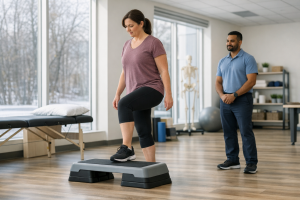
Physiotherapy may be an appropriate next step when lower back pain is limiting daily activity, is not settling as expected, keeps returning or makes it difficult to resume work, exercise or sport confidently. A physiotherapist can assess how the symptoms behave, examine relevant movement and function, screen for findings that may require medical attention and develop a plan around your needs and goals.
Not every episode requires treatment, however. Mild symptoms that are improving and do not involve concerning medical or neurological signs can often be monitored while you remain gently active. At the other end of the spectrum, new loss of bladder or bowel control, numbness around the groin or saddle area, or rapidly worsening leg weakness can indicate a medical emergency and should not wait for a routine physiotherapy appointment.
People looking for physiotherapy for lower back pain in Edmonton may encounter many exercise lists and treatment claims online. The more useful starting point is deciding what level of care fits your symptoms, function, health history and goals. At Human Integrated Performance, a physiotherapy assessment is intended to clarify those factors before recommendations are made.
Lower Back Pain: How to Choose Your Next Step
There is no single number of days that determines when someone must seek care. The decision depends on whether symptoms are improving, staying the same or worsening; how much they affect function; whether leg or nerve-related symptoms are present; and whether your medical history raises additional concerns.
When Short-Term Monitoring May Be Reasonable
Monitoring may be reasonable when pain is mild to moderate, began after a familiar activity, stays mainly in the lower back, does not involve warning signs and is gradually improving. In this situation, clinical guidance generally supports continuing tolerable daily movement rather than staying in bed.
You might temporarily reduce the weight, speed, distance or duration of an aggravating task while continuing activities you can manage. Short walks, regular changes of position and comfortable movement may be more useful than waiting for all discomfort to disappear before moving again. Monitoring should still be active: notice whether your function and symptoms are trending in a positive direction.
When a Physiotherapy Assessment May Be Reasonable
Consider an assessment when pain interferes with walking, sitting, sleep, work, lifting, household tasks or recreation; when improvement has stalled; when episodes keep returning; or when uncertainty about movement is leading you to avoid valued activities. Pain does not have to be severe. Guidance can also be useful when you remain active but do not know how to progress safely.
Earlier assessment may be helpful when your job or sport has specific physical demands, a previous episode did not fully resolve, or symptoms change each time you try to increase activity. The purpose is not simply to assign a label. It is to understand your presentation, identify modifiable factors and decide whether physiotherapy, self-management, medical assessment or coordinated care is the most appropriate next step.
Symptoms That Warrant Timely Medical Advice
Some symptoms are not necessarily emergencies but should prompt timely medical advice. These include lower back pain accompanied by fever or feeling systemically unwell, unexplained weight loss, significant night pain that does not change with position, or symptoms following a substantial fall or collision. Medical input is also important when there is a history of cancer, significant osteoporosis, prolonged corticosteroid use, a recent serious infection or another condition that may affect the assessment.
New or progressing numbness, tingling or weakness in a leg also deserves attention. A physiotherapist may screen these findings, but progressive neurological changes may require medical investigation. If you are unsure how quickly to seek care in Alberta, Health Link at 811 can help you decide between self-care, a community appointment, urgent care or emergency assessment.
Symptoms That May Require Emergency Assessment
Seek emergency medical care for new loss of bladder or bowel control, difficulty initiating urination alongside back or leg symptoms, numbness around the genitals, inner thighs or saddle area, or rapidly worsening weakness affecting one or both legs. Emergency assessment may also be appropriate after major trauma or when severe back pain occurs with symptoms such as fainting, marked abdominal pain or signs of serious illness.
Go to an emergency department rather than waiting for physiotherapy. Call 911 if symptoms appear life-threatening or you cannot travel safely.
Not All Lower Back Pain Presents the Same Way
Lower back pain describes a symptom region, not one diagnosis. Understanding broad patterns can help you communicate clearly, but symptoms alone cannot reliably identify the involved tissue or rule out other causes.
Localized or Nonspecific Lower Back Pain
Most lower back pain is described clinically as nonspecific, meaning it cannot be confidently attributed to one clearly identifiable structure or serious disease. Pain may be central, one-sided or spread across the lower back and buttocks. It can change with bending, sitting, standing, lifting or prolonged activity.
The term does not mean that pain is imaginary or unimportant. It reflects the limits of identifying a single anatomical cause and supports focusing on symptom behaviour, function, contributing factors and recovery goals.
Lower Back Pain With Leg Symptoms
Pain, tingling, numbness or weakness extending into a leg may suggest irritation or altered function involving a nerve, but not every leg symptom is sciatica. Referred pain from the back can travel into the buttock or thigh without clear neurological changes. Hip and other health conditions can also produce overlapping symptoms.
Sciatica commonly refers to pain following the distribution of the sciatic nerve, often associated with a lumbar nerve root. Radicular symptoms may include shooting leg pain, altered sensation or weakness. Their location, triggers and severity vary, so an assessment may include sensation, strength, reflexes and movements that influence symptoms.
Possible Lumbar Spinal Stenosis Presentations
Lumbar spinal stenosis involves narrowing around structures in the lower spine. Some people experience leg aching, heaviness, tingling or weakness during standing and walking, with relief while sitting or bending forward. However, this pattern is not enough to confirm a diagnosis, and imaging findings do not always match symptom severity.
A suspected stenosis presentation may affect exercise selection, walking strategies and coordination with a physician. New or progressive weakness, substantial changes in walking or emergency warning signs require medical attention rather than self-diagnosis from a symptom list.
When Physiotherapy May Be Appropriate
Physiotherapy can be considered when lower back pain affects what you need or want to do, even if you can still move and work. Reasons to seek an assessment may include:
- Pain or stiffness affecting walking, sleep, sitting, driving or daily tasks.
- Difficulty returning to lifting, physical work, gym training, running or sport.
- Symptoms that persist, change unexpectedly or recur with similar activities.
- Concern that movement may be harmful or uncertainty about which activities to continue.
- A need for rehabilitation following medical assessment, surgery or a diagnosed spinal condition.
- Leg symptoms that are stable but require examination, monitoring and an appropriate plan.
Physiotherapy can form one part of care for some nerve-related or diagnosed spinal conditions, but coordination may be needed. A physiotherapist should recommend medical follow-up when findings fall outside routine management, symptoms are progressing or investigation may change the plan. Your preferences, tolerance, access to care and personal goals should be part of that decision.
What to Expect at a First Physiotherapy Assessment
A first appointment should begin with a conversation rather than a predetermined exercise routine. The physiotherapist will seek to understand what has happened, how symptoms affect your life and what you hope to regain.
Your Symptoms and Health History
You may be asked when the pain began, whether there was a specific incident and how symptoms have changed. Useful details include where you feel symptoms, whether they travel into a leg, what aggravates or eases them, how sleep is affected and whether you have experienced numbness, tingling, weakness or changes in bladder or bowel function.
The physiotherapist may also ask about previous episodes, medical conditions, surgeries, medications, recent illness, injuries and investigations. These questions help screen for factors that may alter the examination, require medical referral or influence activity recommendations.
Your Work, Sport and Daily Demands
Function provides context that pain intensity alone cannot. An office worker may need help tolerating longer periods of sitting and commuting, while a parent may need to lift from the floor. A tradesperson, runner or strength athlete will have different capacity requirements. The assessment should connect clinical findings to these real tasks.
Be specific about what you want to do. Goals such as walking for 30 minutes, completing a work shift, lifting groceries or returning to a particular exercise are easier to assess and progress than a general goal of having a stronger back.
Movement and Functional Examination
Depending on your presentation, the physiotherapist may observe walking, spinal or hip movement, balance, strength, muscular endurance and tasks such as sitting, squatting, bending or lifting. The goal is not to find a perfect posture or identify every asymmetry. It is to see how relevant movements affect symptoms and function.
If leg or neurological symptoms are present, the assessment may include sensation, reflexes, muscle strength or tests that place controlled stress on neural structures. Not everyone needs the same tests. Findings, comfort, consent and clinical relevance should determine what is included.
Goals, Consent and the Initial Plan
The physiotherapist should explain the assessment, discuss reasonable options and obtain your consent before examination or treatment. You can ask questions, decline a test or treatment, or request that it be modified.
The first plan may include education, a small number of exercises, temporary activity changes and indicators for follow-up. If the history or examination raises concern, the appropriate outcome may instead be a referral to a physician, an urgent assessment or communication with another healthcare provider.
What a Physiotherapy Plan May Include
Lower back pain care can involve much more than stretching. Evidence-informed plans generally emphasize understanding symptoms, staying engaged in meaningful activity and progressively rebuilding capacity. The balance of strategies depends on the individual.
Education and Confidence in Movement
An explanation of what was and was not found can reduce uncertainty. Education may cover symptom patterns, expected fluctuations, safe activity options and signs that warrant reassessment. This does not mean dismissing pain. It means using pain alongside function, neurological findings, recovery after activity and overall progress to make decisions.
Temporary Activity Modification
Modification is different from complete avoidance. If repeated heavy lifting aggravates symptoms, the initial plan might reduce load, change the number of repetitions or alternate demanding and lighter tasks. If sitting is difficult, shorter sitting periods and more frequent position changes may help while tolerance is rebuilt.
The intention is usually to preserve participation where possible and progressively remove temporary restrictions. Long periods of bed rest can contribute to stiffness, reduced conditioning and greater difficulty returning to activity.
Graded Exercise and Functional Practice
Graded activity means starting at a manageable level and increasing one or more demands over time. A walking plan might begin with several short walks before progressing duration or pace. Lifting practice might move from a light object at waist height toward heavier or lower lifts required at work.
Progression does not have to be perfectly linear. A plan can be adjusted when sleep, workload, illness or a flare changes what is manageable. The goal is to create enough challenge to build capacity without ignoring significant deterioration.
Hands-On Care as an Adjunct
Some plans may include joint mobilization, soft-tissue techniques or other hands-on approaches when clinically appropriate and acceptable to the patient. These interventions may help with short-term symptoms or movement, but they should not be presented as a complete long-term solution.
Hands-on care is generally most useful when it supports active goals, such as making it easier to begin an exercise or resume a task. Its role should be reviewed according to response rather than continued automatically.
If you would like individualized guidance instead of relying on a generic routine, you can book a physiotherapy assessment with Human Integrated Performance. The first step is understanding your symptoms, health context and activity goals.
Why Lower Back Exercises Should Be Individualized
Pelvic tilts, bridges, knee-to-chest stretches and cat-cow movements are often presented as universal lower back exercises. Any of them may be appropriate for some people, unnecessary for others or aggravating in a particular presentation. No short list can account for leg symptoms, current capacity, medical history or the demands to which someone needs to return.
Different Exercises Serve Different Purposes
- Mobility exercises may explore comfortable spinal, hip or whole-body movement.
- Strength and endurance exercises may build tolerance for carrying, lifting, maintaining positions or repeated effort.
- Aerobic activity may support general conditioning, walking capacity, sleep and return to recreation.
- Functional practice can prepare someone for work, household tasks, gym exercises or sport-specific demands.
- Graded exposure can reintroduce a feared or demanding movement in manageable steps.
Exercise selection should reflect what the assessment suggests, what you can do consistently and what matters to you. A person whose main goal is gardening may need a different program from someone returning to hockey or warehouse work.
Does Discomfort During Exercise Mean Harm?
Not always. Muscular effort, stiffness or a temporary and tolerable increase in familiar symptoms can occur during rehabilitation. Pain intensity alone does not reliably indicate tissue damage, particularly in persistent lower back pain.
Response still matters. An exercise may need modification if symptoms become progressively sharper, spread farther into a leg, produce new tingling or numbness, significantly alter movement, or remain substantially worse after the session. New weakness, saddle numbness, bladder or bowel changes, or other emergency signs require medical assessment rather than an exercise adjustment.
How Exercises Are Progressed
Progression may involve more repetitions, resistance, range, speed, complexity or task duration. It may also involve less external support or a closer match to real demands. Only one variable may need to change at a time.
Useful progress indicators include improved confidence, greater activity tolerance, better recovery after a task and increased ability to manage work or recreation. A pain-free session is not the only sign of progress, and a brief symptom fluctuation does not automatically mean the plan has failed.
Staying Active at Home, Work and in Sport
Activity Modification Versus Bed Rest
Complete rest is rarely the preferred approach for uncomplicated lower back pain. Continuing tolerable activities can help maintain mobility, confidence and conditioning. During a more irritable period, this may mean shorter bouts of activity, lighter loads or additional recovery between tasks rather than stopping everything.
A useful question is not only, “Does this hurt?” but also, “How much can I do with acceptable symptoms, and how do I respond later that day and the next morning?” This provides more information than judging one movement in isolation.
Sitting and Position Changes
There is no single correct sitting posture that prevents or resolves lower back pain. A posture that feels comfortable for one person may be irritating for another, and even a comfortable position can become uncomfortable when held for a long time.
Experiment with chair support, seat height and task setup, but prioritize variety. Brief standing, walking or movement breaks can reduce prolonged exposure to one position. The aim is not to sit rigidly; it is to have options and gradually improve tolerance where prolonged sitting is necessary.
Returning to Lifting and Physical Work
Lifting advice should reflect the object, environment, frequency, fatigue and your current capacity. Temporarily holding a load closer, reducing weight, dividing a task or using assistance may keep you participating during a flare. These adjustments do not need to become permanent rules.
Rehabilitation can then build toward the positions and loads your life requires. A single “perfect” lifting technique is less important than having sufficient strength, coordination and adaptability for the task.
Returning to Running, Training or Sport
Return decisions can consider symptom stability, movement confidence, strength, conditioning and the specific demands of the activity. A runner may initially change distance, speed or hills. Someone returning to the gym might reduce load or training volume before rebuilding. Sport progression may move from individual drills to controlled practice and then fuller participation.
Symptoms do not always need to be completely absent before activity resumes, but they should be monitored in context. Increasing leg symptoms, worsening weakness or declining function requires reassessment.
Planning for Flare-Ups
Lower back symptoms can fluctuate. A flare does not necessarily mean a new injury or a complete loss of progress. Sleep disruption, stress, a sudden workload increase, illness or unfamiliar activity may influence symptoms.
A flare plan might include temporarily reducing the most provocative demand, continuing comfortable movement, using previously helpful exercises and returning to normal activity step by step. Seek reassessment if a flare is substantially different from previous episodes, continues to worsen or introduces new neurological or medical warning signs.
When Is Imaging Needed for Lower Back Pain?
X-rays, CT scans and MRIs are not routinely required for uncomplicated lower back pain. Clinical guidelines generally recommend imaging when there is concern about serious pathology, significant or progressive neurological loss, or when results are likely to change medical management.
Imaging can identify age-related or structural changes, but these findings may also appear in people without pain. A scan therefore needs to be interpreted alongside symptoms, examination findings and health history. More detail on a scan does not always provide a clear explanation or determine the best rehabilitation plan.
A physiotherapist cannot decide every imaging question independently. If assessment findings suggest that investigation may be useful, the physiotherapist can recommend medical follow-up. A physician or other authorized provider can consider whether imaging, medication review, specialist referral or other testing is appropriate.
What Recovery May Look Like
Recovery timelines vary. Symptom duration, previous episodes, leg involvement, general health, sleep, work demands, stress, activity level and confidence can all influence the process. It is not responsible to promise that a particular treatment or number of visits will resolve every case.
Progress may include less intense or less frequent pain, improved sleep, longer sitting or walking tolerance, greater strength, fewer restrictions and more confidence managing symptoms. These changes do not always occur at the same rate. Regular review helps determine whether the plan is working, needs adjustment or should involve another provider.
Follow-up frequency should match your needs rather than a fixed schedule. Some people mainly need assessment, education and a manageable home plan. Others benefit from closer progression while returning to demanding work, sport or daily responsibilities. The objective is to support self-management and meaningful participation, not dependence on ongoing passive care.
Choosing the Right Next Step
You may be able to monitor mild, improving lower back pain while staying active and making temporary adjustments. A physiotherapy assessment may be useful when symptoms limit function, persist, recur, include stable leg symptoms or create uncertainty about returning to activity. Timely medical advice is appropriate when your health history or symptom pattern raises concern, while emergency neurological signs should receive immediate medical assessment.
If lower back pain is affecting your work, exercise, sport or daily life, you can book a physiotherapy assessment with Human Integrated Performance. Your physiotherapist can help clarify the presentation, discuss appropriate options and build a plan around the activities that matter to you.